1. Market Size and Growth Projection
The global motor grader market is experiencing steady growth, driven by increasing infrastructure investment and technological advancements. According to industry data, the market was valued at approximately USD 4.2 billion in 2025 and is projected to reach USD 6.8 billion by 2035, registering a compound annual growth rate (CAGR) of 5.0% during the forecast period 2025-2035. Another report indicates that the market stood at USD 4.16 billion in 2025 and is expected to hit USD 6.01 billion by 2032 with a CAGR of 5.4%, reflecting slight variations in growth projections due to regional market differences and data statistical scopes. The consistent growth trajectory underscores the enduring demand for motor graders across global construction and infrastructure sectors.
2. Market Segmentation
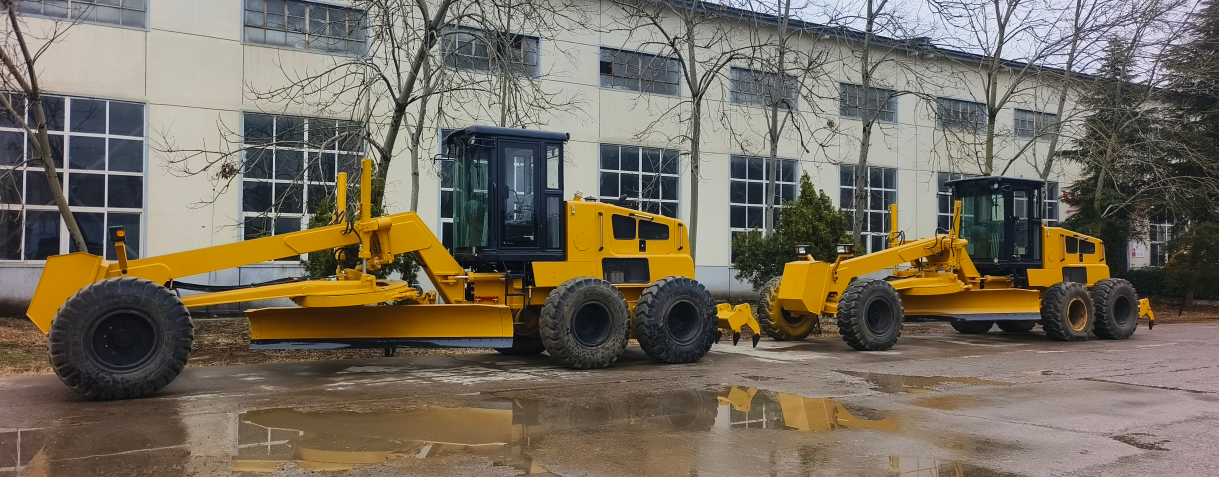
The motor grader market can be segmented based on propulsion type, frame type, application, and region, each segment presenting distinct characteristics and growth prospects.
2.1 Segmentation by Propulsion Type
Internal Combustion Engine (ICE) graders dominate the market, accounting for 79.0% of the total market share due to their mature technology, high power output, and wide adaptability to harsh working environments such as mining sites and remote construction areas. In recent years, electric graders have emerged as a growing segment, driven by global carbon neutrality goals and stricter emissions regulations. Although currently holding a small market share, electric graders are gaining traction in urban construction projects and indoor operations where noise and emissions are strictly controlled, with manufacturers investing heavily in R&D to improve battery life and charging efficiency.
2.2 Segmentation by Frame Type
Articulated frame graders lead the frame segment with a 61.0% market share, thanks to their flexible maneuverability, which is particularly suitable for narrow construction sites and complex terrain such as mountainous roads and urban streets. Rigid frame graders, on the other hand, are preferred for large-scale, high-precision leveling projects such as highway construction and airport runways, due to their higher stability and load-bearing capacity. The demand for articulated frame graders is expected to grow faster in emerging markets, where urbanization and rural infrastructure projects require flexible and efficient equipment.
2.3 Segmentation by Application
Road construction is the largest application segment, accounting for the majority of motor grader demand, as governments worldwide intensify investment in highway expansion, rural road renovation, and transportation network modernization. Other key applications include mining (for haul road construction and site leveling), agriculture (for land leveling, drainage ditch construction, and windrow formation), snow removal (in cold regions), and landscaping. The mining sector is expected to drive significant demand growth, especially in Australia, South Africa, and other resource-rich regions, where mining activities require durable and high-performance graders.
2.4 Segmentation by Region
Asia Pacific dominates the global motor grader market, fueled by aggressive infrastructure expansion in China, India, and Southeast Asia, as well as sustained mining investment in Australia. The region’s rapid urbanization and government initiatives to improve transportation networks are key drivers of market growth. North America is the fastest-growing region, capturing a market share of 35.8%, with the United States dominating the regional market with a 21.4% global share, supported by strong R&D investment and mature construction industry infrastructure. Europe follows closely, with demand driven by road maintenance projects and strict environmental regulations promoting the adoption of eco-friendly equipment. Emerging regions such as Latin America, the Middle East, and Africa are expected to offer significant growth opportunities, as governments in these regions increase infrastructure spending and attract foreign investment.
3. Market Drivers
Several key factors are driving the growth of the global motor grader market, shaping its development trajectory in the coming years.
3.1 Infrastructure Investment Boom
Governments worldwide are ramping up investment in infrastructure development to stimulate economic growth and improve public services. In Asia Pacific, China’s belt and road initiative, India’s road development programs, and Southeast Asia’s urban infrastructure projects are creating massive demand for motor graders. In North America and Europe, the renovation of aging transportation infrastructure and the construction of new highways and airports are also driving market growth. These infrastructure projects require large quantities of graders for site preparation, road base leveling, and other critical tasks, directly boosting market demand.
3.2 Technological Advancements
The integration of smart technologies is transforming the motor grader industry. The adoption of telematics, IoT, and GPS/laser-guided systems has significantly improved the efficiency, precision, and safety of graders. For example, Komatsu’s Komtrax and Caterpillar’s Cat Connect platforms allow fleet managers to track machine productivity, monitor equipment health, and perform predictive maintenance remotely, reducing downtime and operational costs. Additionally, automation and semi-automation technologies are being increasingly integrated into graders, enabling operators to achieve higher precision in leveling tasks and reducing human error. These technological advancements are not only improving operational efficiency but also driving the replacement of old equipment, further stimulating market growth.
3.3 Growing Demand in Emerging Markets
Emerging economies in Asia Pacific, Latin America, and Africa are experiencing rapid urbanization and industrialization, leading to increased demand for construction equipment including motor graders. Local governments in these regions are investing heavily in rural roads, urban infrastructure, and mining projects, creating a large market for affordable and durable graders. Chinese and Indian manufacturers such as Sany Group, XCMG, and Mahindra are leveraging their cost-competitive advantages to expand their presence in these markets, targeting regions such as Africa, Latin America, and Southeast Asia with customized products that meet local needs.
3.4 Rising Demand for Equipment Rental
Renting motor graders has become a viable option for many contractors, especially small and medium-sized enterprises (SMEs), due to the high cost of equipment purchase and maintenance. Renting offers cost savings, job versatility, and access to the latest equipment without heavy upfront investment. Construction equipment rental companies are partnering with grader manufacturers to expand their fleet, providing a steady stream of demand for new graders. This trend is particularly prominent in developed markets such as North America and Europe, and is gradually gaining traction in emerging markets as well, supporting market growth.
4. Competitive Landscape
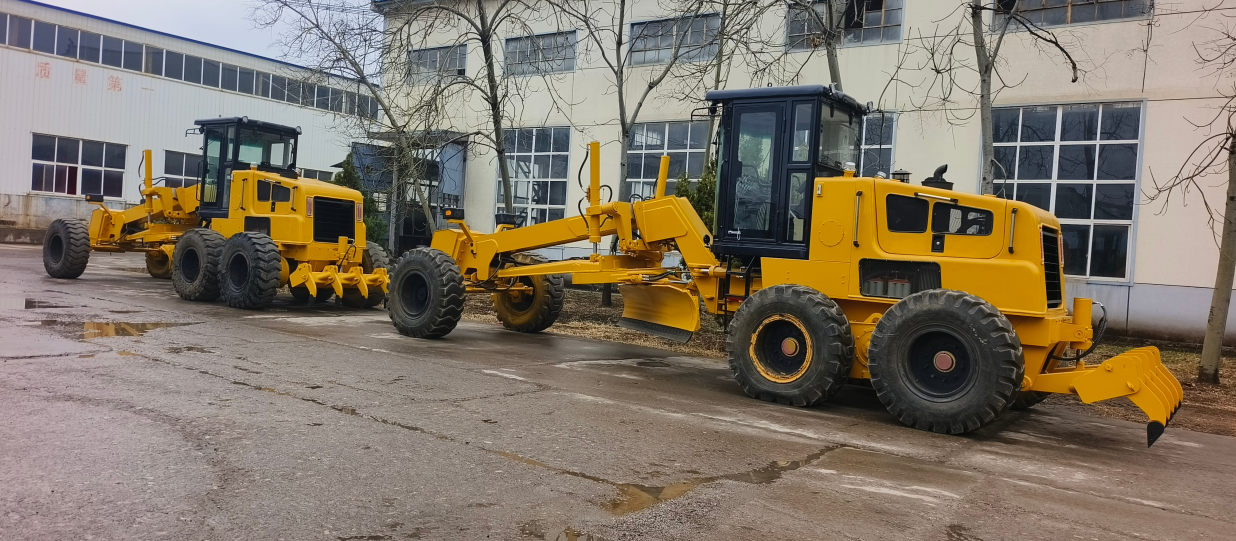
The global motor grader market is moderately consolidated, with the top five players accounting for over 50% of the market share. Key players focus on product innovation, durability, global expansion, and strategic partnerships to maintain their competitive edge.
4.1 Key Global Players
International manufacturers dominate the high-end market, with Caterpillar Inc., Komatsu Ltd., Deere & Company, CNH Industrial N.V., and Volvo Construction Equipment leading the industry. These companies have strong R&D capabilities, extensive global distribution networks, and mature after-sales service systems, which help them maintain a dominant position. For example, Caterpillar and Komatsu offer a broad range of grader models, factory retrofit automation, and dense service networks that minimize downtime, while John Deere and Volvo CE compete aggressively on fuel efficiency and operator comfort upgrades. These players also invest heavily in digital services, bundling over-the-air software updates, predictive-maintenance dashboards, and pay-per-use analytics to lock in aftermarket revenue and enhance customer loyalty.
4.2 Emerging Regional Players
Regional manufacturers from China and India, such as Sany Group, XCMG, Guangxi Liugong Machinery, and Mahindra, are rapidly expanding their market share, particularly in emerging markets. These companies leverage their cost-competitive advantages to offer affordable articulated frame graders, targeting price-sensitive customers in Africa, Latin America, and Southeast Asia. They are also investing in R&D to improve product quality and technological content, gradually expanding into the mid-to-high-end market. Strategic mergers and acquisitions, as well as collaborations with rental companies, are common strategies for these regional players to expand their capabilities and market reach.
5. Key Trends Shaping the Market
The motor grader market is undergoing transformative changes, driven by technological innovation, regulatory pressure, and changing customer expectations.
5.1 Shift Toward Eco-Friendly Equipment
Stricter emissions regulations worldwide are driving manufacturers to develop eco-friendly graders. This includes the adoption of hybrid and electric powertrains, as well as the improvement of ICE efficiency to reduce fuel consumption and emissions. Governments in Europe, North America, and Asia Pacific have implemented stringent emissions standards, prompting manufacturers to invest in R&D to meet these requirements. The development of eco-friendly equipment is not only a regulatory compliance measure but also a way to reduce operational costs for customers, making it a key trend in the market.
5.2 Integration of Digital Construction Management Systems
Digitalization is reshaping the construction industry, and motor graders are no exception. The integration of digital construction management systems, such as building information modeling (BIM) and real-time data analytics, allows contractors to optimize construction processes, improve project efficiency, and reduce costs. Graders equipped with telematics and IoT sensors can transmit real-time data on machine performance, fuel consumption, and maintenance needs, enabling fleet managers to make data-driven decisions. This trend is expected to accelerate in the coming years, as more contractors adopt digital technologies to enhance competitiveness.
5.3 Focus on Operator Comfort and Safety
Manufacturers are increasingly focusing on improving operator comfort and safety features to attract customers and comply with labor regulations. This includes the design of ergonomic cabins, advanced suspension systems, and safety features such as collision avoidance systems and rearview cameras. Improved operator comfort reduces fatigue and improves productivity, while enhanced safety features reduce the risk of accidents. This trend is particularly important in developed markets, where labor safety standards are strict, and operators are more demanding in terms of working conditions.
6. Risks and Challenges
Despite the positive growth outlook, the motor grader market faces several risks and challenges that could hinder its development.
6.1 Economic Slowdowns and Volatile Construction Spending
The motor grader market is closely linked to the construction industry, which is highly sensitive to economic cycles. Economic slowdowns or recessions can lead to reduced government and private investment in infrastructure projects, thereby decreasing demand for motor graders. Uncertainty in global economic conditions, such as inflation, interest rate hikes, and geopolitical tensions, can also impact construction spending, creating volatility in the market.
6.2 Volatility in Raw Material Prices
The production of motor graders requires large quantities of raw materials such as steel, aluminum, and rubber. Volatility in the prices of these raw materials can increase production costs for manufacturers, affecting their profit margins. Fluctuations in global commodity prices, driven by supply chain disruptions, geopolitical tensions, and changes in demand, pose a significant challenge to the market. Manufacturers are increasingly adopting strategies such as long-term supply contracts and material substitution to mitigate this risk.
6.3 Regulatory Pressures on Emissions
While emissions regulations drive innovation in eco-friendly equipment, they also impose additional costs on manufacturers. Compliance with stringent emissions standards requires significant R&D investment, which can be a burden for small and medium-sized manufacturers. In some emerging markets, the lack of uniform emissions standards and enforcement can create an uneven playing field, challenging manufacturers that invest in eco-friendly technologies. Additionally, the transition to electric and hybrid graders requires significant infrastructure investment, such as charging stations, which may slow down adoption in some regions.
7. Conclusion and Outlook
The global motor grader market is poised for steady growth in the coming decade, driven by infrastructure investment, technological advancements, and growing demand in emerging markets. The market is expected to reach USD 6.8 billion by 2035, with a CAGR of 5.0% from 2025 to 2035, supported by the expansion of road construction, mining, and urban infrastructure projects worldwide. Technological innovations such as smart connectivity, automation, and electrification will continue to reshape the market, while the focus on eco-friendly equipment and operator safety will become increasingly important.
The competitive landscape will remain moderately consolidated, with global players dominating the high-end market and regional players expanding their presence in emerging markets. Strategic partnerships, R&D investment, and customization to local needs will be key strategies for manufacturers to gain a competitive edge. However, the market faces challenges such as economic volatility, raw material price fluctuations, and regulatory pressures, which require stakeholders to adopt flexible strategies to mitigate risks.
Overall, the long-term outlook for the motor grader market is positive, with significant growth opportunities in emerging markets and technological innovation driving market transformation. Industry stakeholders, including manufacturers, suppliers, rental companies, and contractors, should closely monitor market trends and regulatory changes to capitalize on emerging opportunities and navigate potential challenges.