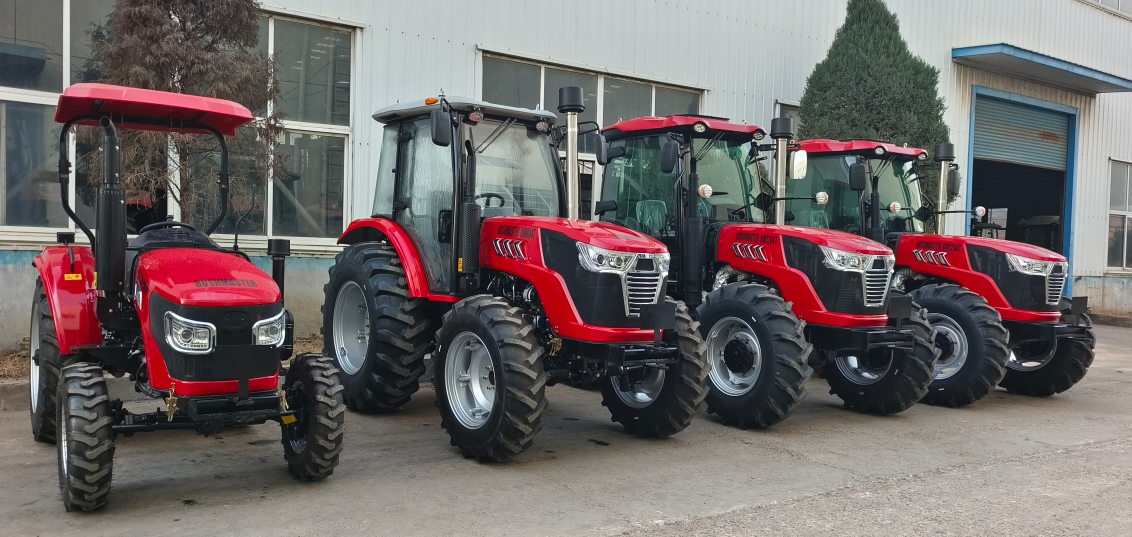

The Philippines boasts promising tractor market potential, fueled by government farm mechanization subsidies under the RCEF program, severe rural labor shortages, and millions of small rice, corn and sugarcane farms across Luzon, Visayas and Mindanao. Below is a concise market development roadmap.
1. Product Localization
Prioritize compact 20–60HP tractors suitable for fragmented paddy fields, with low fuel consumption and spare parts compatible with local maintenance standards. Launch semi-knockdown assembly cooperation with local partners to cut import duties and delivery cyclesPHilMech. Equip tractors with multi-functional attachments for ploughing, seeding and farm transport to raise cost performance for smallholders.
2. Channel & Partner Layout
Cooperate with authorized local distributors, agricultural cooperatives and farm machinery rental service providers—most Filipino farmers cannot afford full tractor ownership and rely on rental/co-sharing models. Build regional after-sales service centers in major agricultural provinces to guarantee timely repair and spare parts supply, a core competitive advantage over Japanese brands.
3. Policy & Financing Matching
Align sales with PhilMech’s subsidy projects; submit product certification to qualify for government procurement tenders for farmer groups. Collaborate with local banks to launch low-interest installment plans, lowering upfront payment barriers for individual farmers and contractors.
4. Field Marketing & Customer Education
Organize on-site tractor demonstration events in rural towns to showcase working efficiency on wet farmland. Train local dealers and mechanics for daily operation and basic maintenance. Promote tractor rental business packages to machinery entrepreneurs, expanding bulk sales channels rapidly.
5. Long-Term Risk Control
Adjust inventory based on regional demand: compact tractors for Luzon rice belts, medium-horsepower models for large commercial plantations in Mindanao. Maintain stable spare parts inventory to avoid after-sales breakdown risks amid long import lead times.
With policy tailwinds and rising mechanization demand, cost-effective, service-supported Chinese tractors can capture growing market share through localized products, flexible financing and full rural service coverage.